Are you being held back by your osteoarthritic knees?
Trust Your Knees is personalised one-on-one coaching tailored specifically for you needs, your goals and your knees.
To help you move with less pain, build real strength, and most importantly build the confidence to get back to the life you've been missing.
You know this feeling...
The pain isn't just in your knee. It's in everything it's stopped you doing.
Maybe it started small. A bit of stiffness in the morning. A twinge on the stairs. Then slowly it became something bigger.
You stopped going for the long walks you use to love. You started planning days around how much standing you could manage. Maybe even the small things, the activities you used to consider easy have started to become more of a challenge.
If any of this sounds familiar - You are not alone.
Here's what most people aren't told
You are not a passive player in the story of your knees.
Your doctor may have told you there's nothing to be done until a knee replacement is justified. That can feel like a door closing — like the only option is to wait, manage, and decline.
But that's not the whole picture.
Here's what the evidence actually shows: while you can't reverse the structural changes in your knee, you have far more influence over what happens next than you've probably been led to believe.
Osteoarthritis is shaped by a whole range of factors — and most of them are things you can actively work on:
The Strength of the muscles around your knees
Strong quadriceps and hip muscles act as shock absorbers, reducing load on the joint with every step. Building that strength is available to you at any age, any fitness level.
How you move and how often
Movement nourishes the joint. It circulates the fluid that feeds your cartilage, reduces stiffness, and keeps the supporting structures strong.
Your pain system
Pain in osteoarthritis isn't just a mechanical signal — it's influenced by sleep, stress, mood, and how you think about your condition. Understanding this doesn't mean the pain isn't real. It means there are more ways to influence it than you might think.
Your confidence and beliefs
Fear of movement is one of the biggest drivers of decline in knee OA. The belief that your knees are fragile, that pain means damage, that exercise will make things worse — these beliefs have consequences. Changing them, with the right support, changes outcomes.
You cannot change what's happening inside the joint. But you can change how strong it is, how well it's supported, how your body manages pain, and how confidently you move through your life.
That's not a small thing. For most people, it's the difference between a life that keeps shrinking and one that starts expanding again.
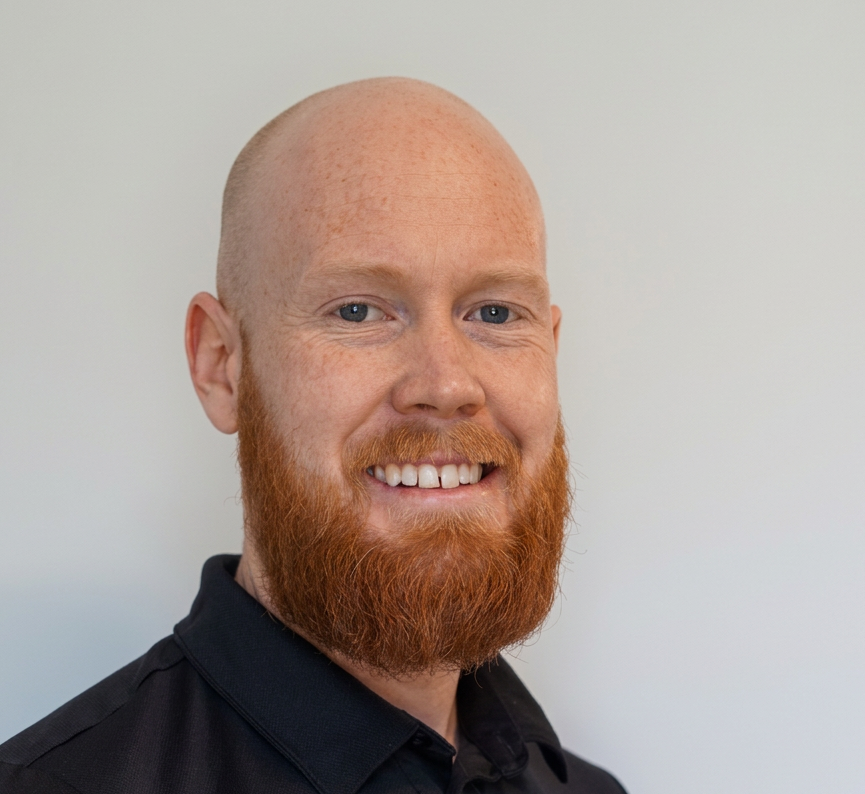
Hi, I'm Tim -
I got into this work because of a pattern I kept seeing.
Someone comes in with knee osteoarthritis. They've been told to rest, to wait, to come back when it's bad enough for surgery. They arrive frustrated — and quietly convinced that this is just what getting older feels like now.
Then, with the right support, something shifts.
Not overnight. But steadily — they start moving with more confidence, hurting less, doing things they'd quietly written off. The walks come back. The stairs get easier. The identity of "person with bad knees" starts to loosen its grip.
I've watched that happen hundreds of times across 15 years working in hospitals, outpatient clinics and private practice. It never gets old.
My approach is built around one belief: you are not a passive bystander in the story of your knees. The structural changes are real — but the strength you can build, the habits you can form, and the confidence you can develop around movement are equally real.
What I bring is coaching grounded in physiotherapy. The plan we build together isn't generic or guesswork — it's built around where you actually are, what your body needs, and what you want to get back to.
If you've been looking for someone who gets it — and can give you a clear, honest path forward — I'd love to talk.
For those who want continued support — adapting your plan, staying accountable, and having someone in your corner for the long term.
Ongoing support
Following your free consultation, the 8-week programme is where the real work begins — and where most people start to feel genuinely different.
It's a structured, progressive programme designed to build strength, confidence, and a sustainable routine around your knees. Not a generic plan handed to you on a sheet — but something built specifically around where you are right now, what your body responds to, and what you want to get back to.
Each week we connect to review how things are going, adjust the plan based on how your knee is responding, and work through any obstacles that have come up. Because the path is rarely perfectly straight — and having someone to problem-solve with in real time makes all the difference between staying on track and quietly falling off it.
By the end of 8 weeks, the goal isn't just a stronger knee. It's that you understand your body, trust your movement, and have the tools to keep progressing long after we've finished.
8-week intro programme
We talk through your knees, your history, and your goals. I'll explain honestly what's realistic for your situation, dispel any myths that might be holding you back, and answer the questions you've been sitting with. No pressure, no obligation — just clarity.
Free 30-minute consultation
How it works
.jpg)
The 8-week programme exists to answer a question most people with knee osteoarthritis have stopped asking: what is my knee actually capable of?
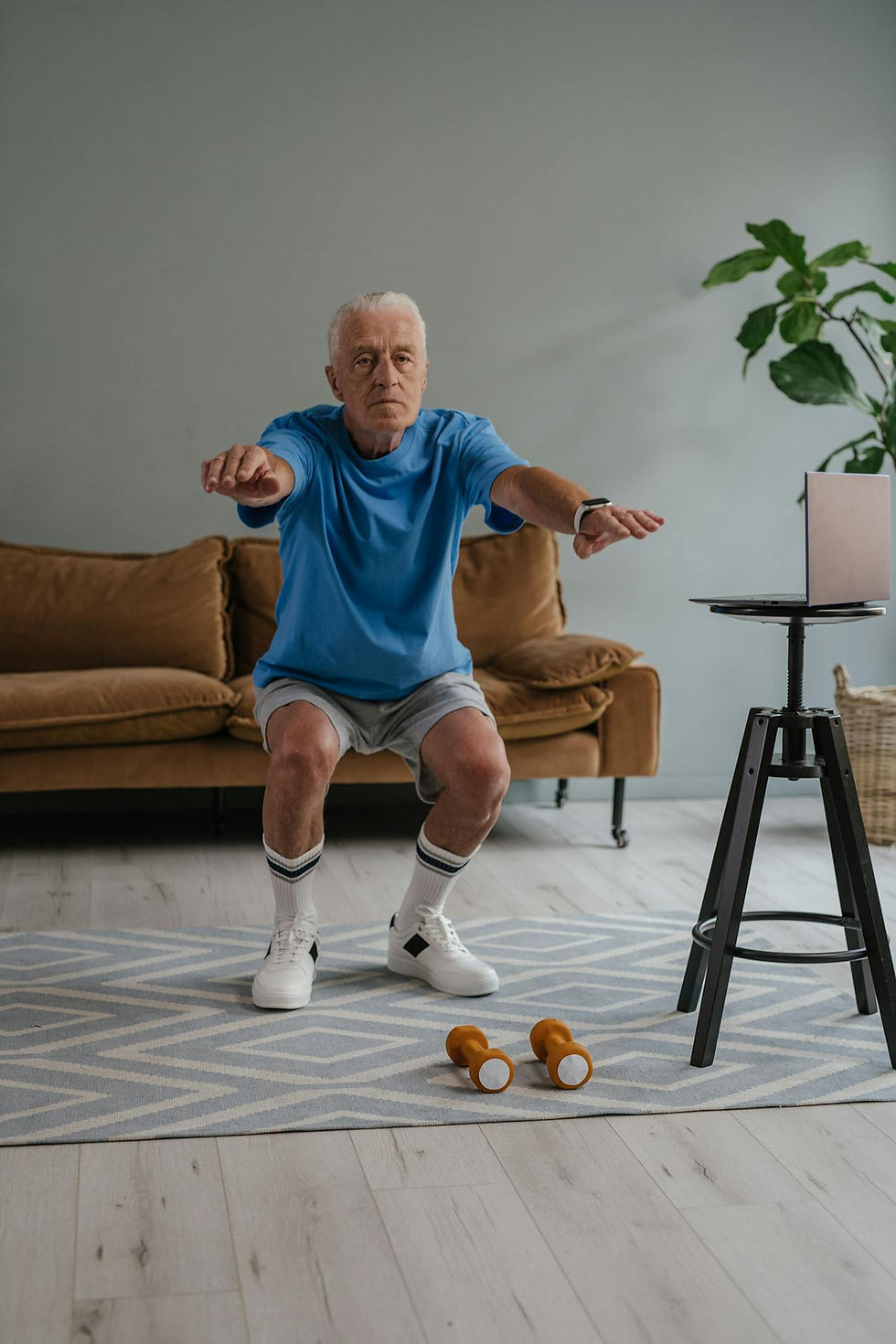
This isn't about building full strength in 8 weeks — that takes longer, and we'll be honest with you about that. It's about starting properly. Each week we connect on a video call to review how your knee is responding, answer your questions, and adapt your exercise plan accordingly. Between sessions, your exercises are delivered as recorded videos so you always know exactly what to do and how to do it safely. Alongside the movement work, we weave in education — helping you understand your knee, read its signals, and build habits that actually stick. Because confidence comes not just from doing the exercises, but from knowing why they work and what to do when things don't go perfectly.
By week 8 you'll have a clearer picture of what your knee can do, a set of tools you know how to use, and the foundation to keep going. For most people, the most valuable thing they take away is a shift in belief — from "my knees are the problem" to "I know how to manage this."
What is the 8-week confidence course?
See Real Results
"Before we started, the pain was such that I was avoiding any kind of exercise. I could not walk more than an average of 1,500 steps a day. I had to take a wheelchair at the airport because I could not manage the distance to the gate. The pain would wake me up in the night."
"What surprised me most was that the therapist did not push me further than I wanted to go. He understood my tendency to do too much, and helped me set realistic goals — sometimes urging caution."
"Now I have increased mobility to an average of 4,000 steps a day — and on some days, up to 7,000. I can stand to shower and dress myself. I have very little pain at night and can sleep on my side again. I've taken up gentle free-time walking, and I've even added an extra weekly session myself."
"If you are looking for a physiotherapist who will really listen to your worries, and come up with a plan that suits not only your physical needs but your psychological needs too — Tim will be a good match for you."
- Helen